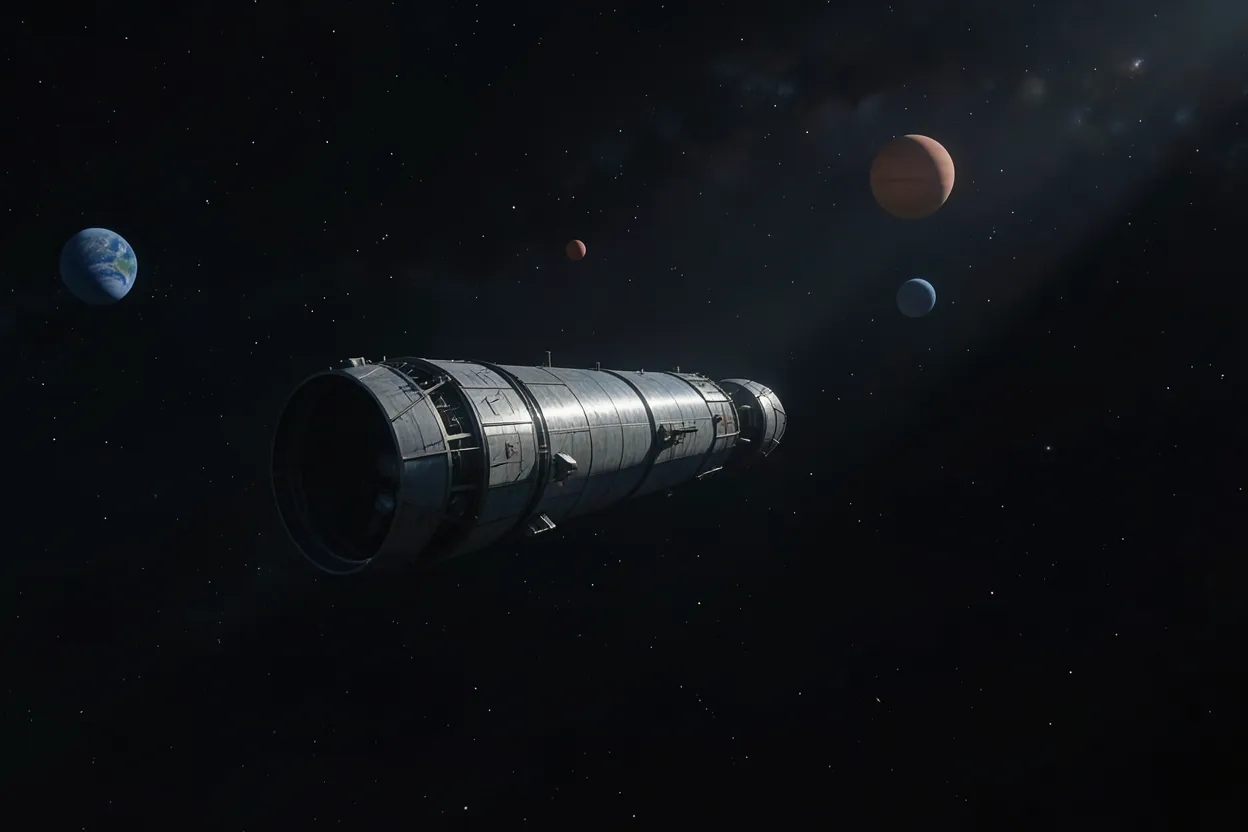
Mission To Mars
The countdown sequence faded into a singular, rhythmic hum vibrating through the floorboards of the Ares V.
You are assigned to the Vanguard, a compact interplanetary ship slipping free of Earth's pull in 2035. The engines hum like a living thing and the sun slashes the viewport into thin gold; corridors are narrow, air is recycled, and time melts into routine and memory. Two years of cold sky stretch ahead—long enough for small problems to become disasters and for strangers to become the family you cannot leave behind. You carry supplies, secrets, and the fragile hopes of millions; one missed alarm, one botched repair, one heated word can turn a quiet watch into a race for survival. Radiation streaks, micrometeoroid glints, failing hardware, and frayed nerves make every action heavy with consequence. You learn to read humming panels and the silences between voices, to tend the ship and the people within it, because Mars waits without mercy and only steady hands and clearer hearts will get you there.
Look inside

The Earth is now a shrinking pale blue marble, receding behind the reinforced viewport of the Ares Explorer. The violent rumble of the launch has faded, replaced by the persistent, rhythmic hum of the oxygen scrubbers and the silent weightlessness of deep space. Floating in the command module, you watch the stars stretch into steady, unblinking points of light that mark your path toward the crimson horizon of Mars. Your first week has been marked by routine calibrations, but a persistent warning light just flickered to life on the navigation console. The telemetry stream from the secondary antenna is fluctuating, indicating a minor alignment issue that could degrade your communications window as you exit Earth's immediate influence. Ignoring it risks a total signal loss, while fixing it requires a brief EVA to the exterior casing. Technicians back at mission control expect a status report within the hour. You drift toward the manual, weighing the necessity of external repairs against the physical fatigue of your first days in zero-gravity. The ship waits, its systems pulsing with potential, while the void outside offers no mercy for hesitation.
Readers also enjoyed






Questions
- What am I buying?
- A pack of Usage credits. Each page you read uses a few credits; this pack covers the whole story. Leftover credits work on any other story.
- How is this different from a book?
- You make the choices. The story is written, illustrated and narrated as you go, so every read is different.
- Are credits money?
- No. Credits are valid only inside CyberStory, can't be cashed out or transferred, and may be reversed for refunds or chargebacks.